


In the past decade, the once-open invitation for cross-border capital to flow freely into residential real estate has turned into a guarded welcome—or, in many cases, a slammed door. From Vancouver to Seoul, policymakers are tightening the screws on foreign property ownership, arguing that unchecked overseas investment distorts local housing markets and pushes prices out of reach for citizens.
South Korea’s newly announced restrictions—requiring government approval, mandatory move-in deadlines, and two-year residency commitments for foreign buyers in Seoul and surrounding regions—are not an isolated case. They are part of an accelerating global trend, one that reflects political anxieties over affordability, national security, and social cohesion.
But while the rhetoric is strong, the effectiveness of these bans remains under scrutiny.
Canada: A Hardline Stance Extended
Canada has been at the forefront of restrictive housing policy. In 2023, it introduced a sweeping nationwide ban on foreign residential purchases, positioning the measure as a tool to ease the affordability crisis gripping cities like Toronto and Vancouver. The ban, initially set for two years, was recently extended through January 2027 after data suggested overseas money had intensified price pressures in key markets.
Yet despite these moves, housing affordability has not meaningfully improved. Toronto and Vancouver remain among the world’s least affordable cities, leading some analysts to argue that the ban is more political signaling than effective market correction.
Australia: Blocking Existing Homes, Allowing New Builds
Australia took a more nuanced approach in April 2025, announcing a two-year moratorium on foreign purchases of established dwellings, effective through March 2027. The idea is straightforward: channel overseas investment into new construction projects rather than siphoning off the limited supply of existing homes.
Foreign buyers can still fund new housing developments—policymakers hope this stimulates supply—while established homes remain off-limits. The measure reflects Australia’s deep concern that speculative demand, especially from Asia, has exacerbated housing shortages in Sydney, Melbourne, and Brisbane.
Still, critics note that affordability issues in Australia stem largely from chronic under-supply, sluggish planning approvals, and infrastructure bottlenecks—factors that foreign capital restrictions alone cannot resolve.
New Zealand: From Ban to Partial Reversal
Interestingly, New Zealand has already begun to reverse course. After imposing some of the world’s toughest restrictions on foreign buyers in 2018, the country has decided to partially lift its ban. Wellington hopes to attract successful foreign residents and rekindle capital inflows amid a sluggish economy.
This shift underscores the fluid nature of global housing policy: bans that emerge in times of political heat often soften once economic growth becomes a higher priority.
Singapore: Heavy Taxes, Limited Access
Singapore represents the strictest end of the spectrum. Foreigners are completely barred from purchasing public housing flats—the bulk of the city-state’s housing stock—and face an eye-watering 60% additional buyer’s stamp duty on private dwellings, on top of standard transaction taxes.
The result? Singapore remains one of the most expensive housing markets globally, but the government points to the policy as a success in protecting domestic access to housing. Investors, meanwhile, have shifted focus toward commercial real estate and high-end new developments.
United States: A State-Level Patchwork
The United States has historically welcomed overseas property investment, but that openness is now fragmenting at the state level. Since 2021, 30 states have introduced 54 bills restricting foreign ownership of land and housing, with 17 laws enacted in 2024 alone.
Much of this legislation is explicitly aimed at Chinese buyers. Of the 414 bills introduced nationwide since 2021, 266 contain provisions targeting Chinese ownership. Concerns extend beyond affordability to issues of national security, especially around agricultural land near sensitive infrastructure.
In reality, Chinese entities own just 0.021% of privately held U.S. agricultural land—about one acre out of every 4,800. Yet the legislative momentum reflects a potent mix of geopolitical rivalry and public unease, rather than a proportionate market threat.
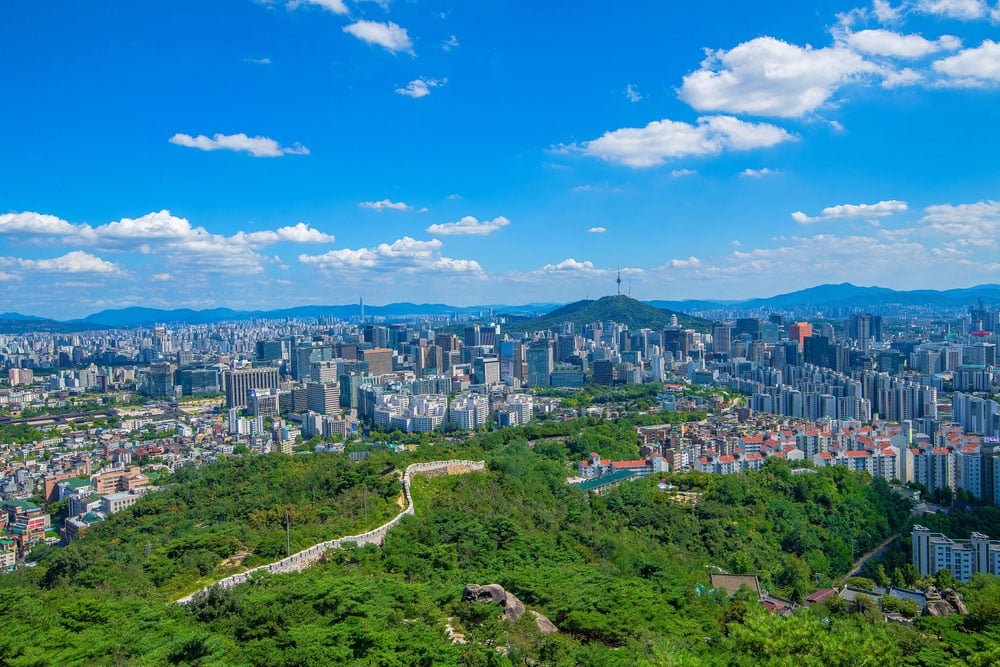
South Korea’s Distinctive Move
What sets South Korea apart is the rationale. While most countries have justified restrictions on grounds of affordability or national security, Seoul has explicitly linked its measures to stabilizing the real estate market itself.
Foreign buyers in Seoul and surrounding areas must now move into their purchased property within four months and stay for at least two years—a residency requirement not seen elsewhere. The rule targets speculative ownership directly, rather than merely taxing or banning it.
The government has framed this as a one-year experiment, lasting through August 2026, after which policymakers will evaluate whether the program should be extended or adjusted.
A Temporary Shift, Not a Permanent Trend?
Indeed, the pendulum may already be swinging back. New Zealand’s reversal, South Korea’s trial designation, and the nuanced Australian model all suggest that governments are experimenting rather than committing permanently.
The global wave of anxiety about foreign property ownership arguably peaked in 2018, when nearly every major market—from Canada to Singapore—tightened the screws. Since then, governments have discovered that while restrictions are politically popular, they are no panacea for housing crises.
Conclusion: Politics vs. Economics
Foreign property restrictions have become a symbolic tool in the global housing debate—an easy way for leaders to signal action on affordability while deflecting attention from deeper structural issues.
South Korea’s new rules align with a worldwide push to rein in speculative overseas investment, but the long-term effectiveness of such policies remains doubtful. In practice, affordability depends less on who is allowed to buy and more on how fast societies can build, finance, and distribute housing supply.
For now, the global trend is toward tighter restrictions. But as economies slow and governments court investment, the bans themselves may prove less permanent than the political narratives that created them.
Have you read?
The Citizenship by Investment (CBI) Index evaluates the performance of the 11 nations currently offering operational Citizenship By Investment (CBI) programs: St Kitts and Nevis (Saint Kitts and Nevis), Dominica, Grenada, Saint Lucia (St. Lucia), Antigua & Barbuda, Nauru, Vanuatu, Türkiye (Turkey), São Tomé and Príncipe, Jordan, and Egypt.
Copyright 2025 The United Gazette of Global Policy (UGGP News). All rights reserved. This material (and any extract from it) must not be copied, redistributed, or placed on any website without UGGP News's prior written consent. For media queries, please contact: info@uggp.com