


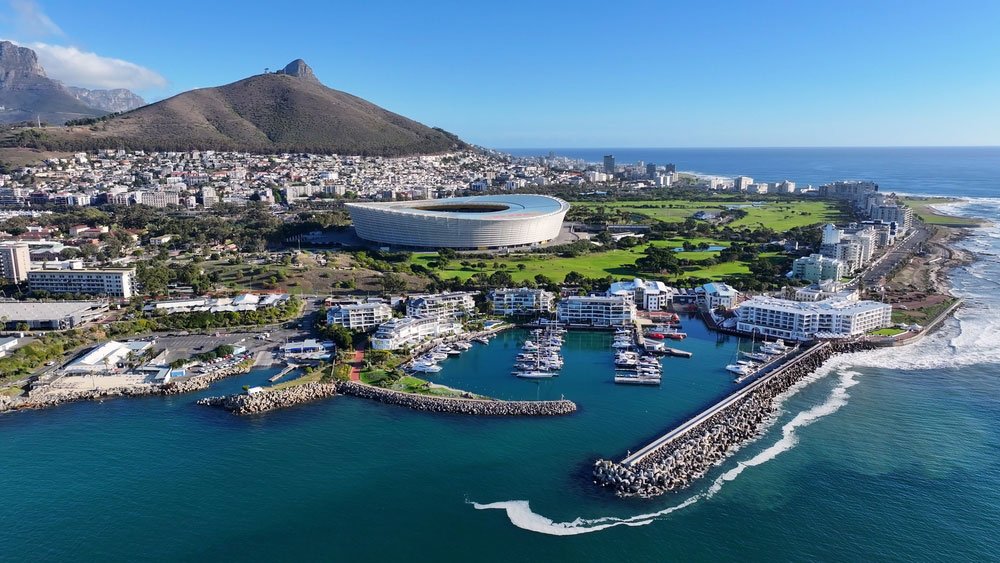
South Africa may still be the wealth heavyweight of Africa, but its grip on high-net-worth individuals (HNWIs) is slipping. The country has lost more than 2,400 millionaires over the past decade, even as Africa’s overall wealth pool expands.
According to the 2025 Africa Wealth Report by Henley & Partners, the continent’s millionaire population is projected to grow by 65% in the next ten years. Today, Africa is home to 25 billionaires, 348 centi-millionaires (net worths above $100 million), and 122,500 millionaires—a striking leap from the late 20th century, when billionaire ranks were almost non-existent and many African economies were stagnant.
South Africa: Still the Giant
With 41,100 millionaires, 112 centi-millionaires, and eight billionaires, South Africa accounts for more than a third of Africa’s total millionaire population. Its wealth base is nearly equal to that of the next five richest nations combined.
Egypt follows with 14,800 millionaires, then Morocco (7,500), Nigeria (7,200), and Kenya (6,800). Together, these five countries represent 63% of Africa’s millionaires and nearly 90% of its billionaires.
Yet beneath South Africa’s dominance lies a troubling trend: the country’s millionaire population shrank by 6% in the past decade, a net loss of 2,466 individuals.
Rising Stars: Mauritius, Rwanda, Morocco
The continent’s most dynamic growth is happening elsewhere.
- Mauritius stands out with a 63% surge in HNWIs, powered by political stability, favorable tax regimes, and a successful residence-by-investment framework.
- Rwanda recorded a 48% increase, reflecting its transformation into one of Africa’s most stable economies.
- Morocco added 40% more millionaires, thanks to sustained reforms and new investment channels.
- By contrast, Nigeria’s millionaire population collapsed by nearly half (–47%), with Angola (–36%) and Algeria (–23%) also experiencing steep declines.
Why South Africa’s Millionaires Are Leaving
Wealth flight is not unique to Africa. Globally, HNWIs migrate to countries that offer security, rule of law, and insulation from political shocks. For South Africa, the drivers are clear:
- Safety and security concerns amid rising violent crime
- Uneven quality in healthcare and education
- Anxiety over political volatility
The most popular destinations for South Africa’s wealthy include Australia, Switzerland, Monaco, Singapore, the UAE, New Zealand, Malta, and Mauritius.
A Country of Contradictions
Paradoxically, South Africa continues to offer an environment many global markets envy:
- Lifestyle & infrastructure: Cape Town was named the “Best City in the World” for the seventh time in 11 years by the 2025 Telegraph Travel Awards.
- Geographic advantage: Its central time zone allows seamless business across Europe, the Middle East, Asia, and the Americas.
- Relative geopolitical calm: Unlike other regions, South Africa is not directly entangled in major global conflicts.
- Financial resilience: Despite volatile politics, its banking sector is well-capitalized and globally respected. The Johannesburg Stock Exchange (JSE) remains a powerhouse, with two-thirds of its listings tied to international revenues rather than purely domestic assets.
For many affluent South Africans, the “exodus narrative” masks a more balanced reality: those who remain often enjoy a world-class lifestyle backed by globally connected financial systems.
Africa’s Wealth Boom: More Than Numbers
Looking beyond South Africa, Africa’s wealth story is one of redistribution and resilience. A continent once seen as trailing the global economy is now on track for a 65% surge in millionaires by 2035.
Investor Takeaway
For HNWIs and global investors, the key lessons are clear:
- Scale vs. Stability: South Africa remains Africa’s wealth giant, but Mauritius, Morocco, and Rwanda demonstrate how smaller, stable markets are now magnets for global capital.
- Lifestyle appeal matters: Quality of life, connectivity, and time-zone advantages remain competitive strengths for South Africa despite security concerns.
- Wealth creation is accelerating: Africa’s millionaire population is set to expand dramatically—creating both opportunities for investment and challenges in governance.
Conclusion: South Africa at a Crossroads
South Africa’s loss of 2,400 millionaires tells one story, but its enduring infrastructure, financial resilience, and global positioning tell another. For global HNWIs, it remains a paradox: a country grappling with serious risks yet offering opportunities, lifestyle appeal, and access to Africa’s broader growth story.
The broader lesson is that Africa’s wealth is shifting, not shrinking. Investors who can navigate the volatility stand to benefit as the continent’s next wave of prosperity takes shape.
Have you read?
The Citizenship by Investment (CBI) Index evaluates the performance of the 11 nations currently offering operational Citizenship By Investment (CBI) programs: St Kitts and Nevis (Saint Kitts and Nevis), Dominica, Grenada, Saint Lucia (St. Lucia), Antigua & Barbuda, Nauru, Vanuatu, Türkiye (Turkey), São Tomé and Príncipe, Jordan, and Egypt.
Copyright 2025 The United Gazette of Global Policy (UGGP News). All rights reserved. This material (and any extract from it) must not be copied, redistributed, or placed on any website without UGGP News's prior written consent. For media queries, please contact: info@uggp.com