

Dollar Under Pressure: What CEOs, Investors, and Policymakers Need to Know Now

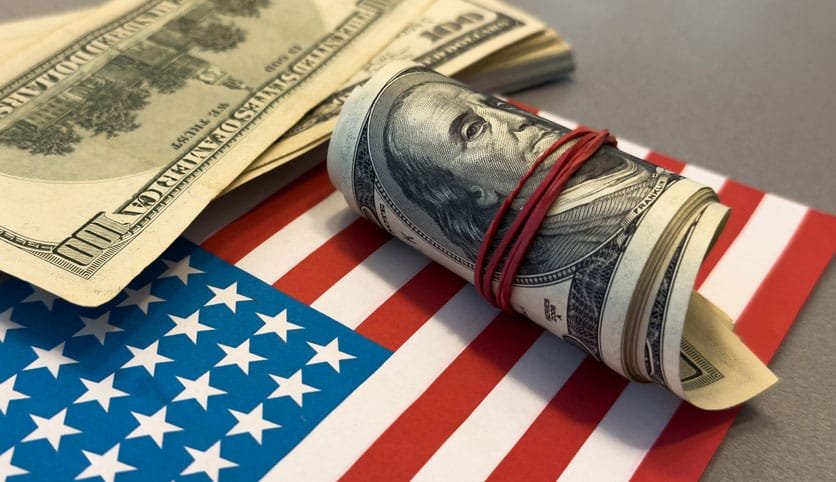
The U.S. dollar has entered a period of pronounced weakness after four straight sessions of declines, reflecting heightened political and economic uncertainty. A government shutdown, legal battles threatening Federal Reserve independence, weaker labor market data, and sluggish manufacturing activity are converging into a perfect storm for currency markets. For CEOs, board directors, investors, and policymakers, the dollar’s trajectory is more than a financial footnote—it is a barometer of economic resilience and policy credibility.
The Government Shutdown: Immediate Market Impact
The ongoing U.S. government shutdown has amplified investor unease. Beyond the political gridlock, the practical consequences are significant: delays in crucial economic data releases, including the September nonfarm payrolls, impair the Federal Reserve’s ability to make evidence-based policy decisions. With the Fed’s next meeting scheduled for October 29, policymakers will be operating with reduced visibility, increasing the risk of either missteps or cautious inaction.
For global investors, this lack of transparency is particularly troubling. Economic data is the lifeblood of market pricing, and its absence can distort risk assessment, reduce liquidity, and elevate volatility. In today’s environment, even the perception of institutional dysfunction is enough to erode confidence in U.S. assets.
Central Bank Independence Under Scrutiny
In parallel, a legal dispute between former President Donald Trump and Federal Reserve Governor Lisa Cook has introduced a new layer of uncertainty. Trump’s effort to remove Cook, now scheduled for a U.S. Supreme Court hearing in January, has become a flashpoint for questions about the Fed’s autonomy.
For decades, the Federal Reserve’s credibility has rested on its independence from political pressures. Any perception that monetary policy decisions could be politically influenced would not only undermine domestic confidence but also diminish the U.S. dollar’s standing as the world’s reserve currency. While the Supreme Court’s timeline offers some clarity, political risk remains firmly embedded in market calculations.
Labor Market Weakness: A Surprise Payroll Shock
The ADP report delivered another blow to investor sentiment. Instead of the expected gain of 50,000 private-sector jobs, the economy shed 32,000 positions in September. This reversal suggests that the labor market, once a bedrock of U.S. resilience, may be losing momentum.
Hiring weakness reverberates through the economy: reduced consumer spending, weaker corporate earnings visibility, and heightened recessionary fears. For CEOs managing global supply chains, private equity investors evaluating portfolio resilience, and hedge funds trading macro exposures, the labor market data reinforces the case for caution.
Manufacturing: A Sector Stuck in Contraction
The latest manufacturing survey showed marginal improvement, but the sector remains in contraction. Subdued new orders and ongoing employment softness underscore structural challenges, including the lingering drag of tariff-related headwinds.
For executives leading industrials, technology hardware, or export-oriented sectors, the signal is clear: global trade friction and domestic political instability are suppressing demand. This contraction is not just a headline—it is a material risk to corporate earnings forecasts, capital expenditure plans, and cross-border investment strategies.
Treasury Yields: A Pause Before the Storm?
Treasury markets provided a rare measure of stability, with the 10-year note holding steady around 4.1%. This stability reflects investor indecision: a balancing act between political dysfunction, economic weakness, and expectations for potential Federal Reserve policy adjustments.
Institutional investors, sovereign wealth funds, and family offices are recalibrating duration and credit risk exposure in anticipation of policy uncertainty. For wealth managers and policymakers alike, the yield curve remains the most critical barometer of investor sentiment and recession probability.
Strategic Implications for CEOs and Investors
- Currency Volatility: A weaker dollar could boost U.S. exporters in the short term but increase import costs, affecting consumer inflation. For multinational corporations, hedging strategies need urgent reassessment.
- Capital Markets: Data delays and political risk create uncertainty in Fed decision-making. Equity and bond markets may remain range-bound until visibility improves.
- Policy Risk: The Trump–Cook dispute is more than a headline—it is a referendum on the Fed’s independence. Any erosion of central bank credibility could destabilize long-term capital flows into U.S. markets.
- Labor and Demand Risks: The payroll shock is a warning to corporate boards and private equity firms: resilience strategies must account for a potential slowdown in consumer demand.
- Global Positioning: For wealth managers and institutional allocators, diversification across currencies and geographies becomes critical when U.S. stability is in question.
Global Context: Why This Matters Beyond the U.S.
The U.S. dollar is not just America’s currency—it is the backbone of global trade, capital flows, and financial stability. For emerging markets, a weaker dollar could provide breathing room by reducing debt-servicing costs. For developed economies, however, dollar weakness coupled with political instability raises systemic concerns about the reliability of U.S. economic leadership.
Policymakers across Europe, Asia, and the Middle East are closely watching Washington. For multinational CEOs and global investors, the reputational damage of U.S. dysfunction is as material as the financial impact.
Preparing for a Period of Dollar Volatility
The convergence of a government shutdown, labor market weakness, manufacturing contraction, and legal challenges to the Federal Reserve has left the U.S. dollar vulnerable. For leaders across the corporate and financial landscape, the lesson is straightforward: uncertainty is the new baseline.
Navigating this environment requires discipline in risk management, agility in strategy execution, and clarity in communication with stakeholders. CEOs, investors, and policymakers cannot control political outcomes, but they can prepare for heightened volatility, recalibrate expectations, and reinforce resilience across their organizations.
In an era where politics, policy, and markets are more intertwined than ever, the dollar’s trajectory is a direct reflection of America’s credibility. The coming weeks will test whether the world’s largest economy can restore clarity—or whether investors must brace for a prolonged period of fragility.
Have you read?
The World’s Best Medical Schools.
The World’s Best Universities.
The World’s Best International High Schools.
Global Mobility and Wealth Security: Why Citizenship by Investment (CBI) and Residency by Investment (RBI) Programs Are Essential for Global Executives and High-Net-Worth Individuals. The Chief Economists magazine, UGGP News, and the CEO Policy Institute.
Copyright 2025 The United Gazette of Global Policy (UGGP News). All rights reserved. This material (and any extract from it) must not be copied, redistributed, or placed on any website without UGGP News's prior written consent. For media queries, please contact: info@uggp.com